Reached 4,400+ student reading hours in 30 days
Group repeated feedback, check it against usage evidence, and keep human review before revision.
INTERACT WITH THE WINDOW
Hold your open palm still briefly.
Then lift to open, or lower to close.
Camera optional. Drag the shade up or down.


I’m a curious learner shaped by life in Hong Kong, the UK, France and Singapore. My mission is to help people understand one another across cultures through the products I build and stories I tell.
A little of how I see the world.
SELECTED WORK
Research, workflows and product decisions.
Open the suitcase. Select a laptop, map or print.
Three projects. Different questions.
Illustrated objects, linking to my project stories.
View all projects as a listHOW I WORK
I like understanding how feedback, decisions and delivery connect, then building a process around them.
I start with the user need, the outcome I’m aiming for, and the assumptions that need testing.
I work through goals, success metrics, user stories, scope and acceptance criteria. Writing helps expose unanswered questions.
I build a prototype to explore behaviour and questions that are difficult to settle in writing.
I compare what the prototype reveals with the goals and acceptance criteria, then revisit my assumptions.

Product Manager
Managed products at a US$3.2 million seed-funded education startup serving 1M+ users across three platforms.

Customer Excellence & Digital Solutions · Placement Intern
Interviewed 15+ users across six APAC markets and developed five RPA solutions, saving 2,300+ manual hours annually.

Summer Intern · Learning & Development
Moderated focus groups and analysed feedback from 500+ APAC employees to improve learning sessions.

Managing Director
Led five consultants, raising annual volunteering hours by 72% and project contracts by 68%.

Master in Management · Class of 2027
Specialised in Technology and Innovation, AI Full Stack Implementation, and Corporate Entrepreneurship.

BSc (Hons) Management with Finance
First Class Honours · 81.6%.

Full Stack Development with AI Executive Programme
Building technical fluency through an executive programme.
A LITTLE MORE ABOUT ME
I’m based in Hong Kong, with experience living and studying in the UK, France, and Singapore.

In photography and product work, I make choices about what to include, what to leave out, and how to tell a clear story.
View photography portfolio ↗







ALUMNI SHARING · SINCE 2022
I return to my high school to share what I’ve learnt at university and help students explore their next steps.
View the talk slides ↗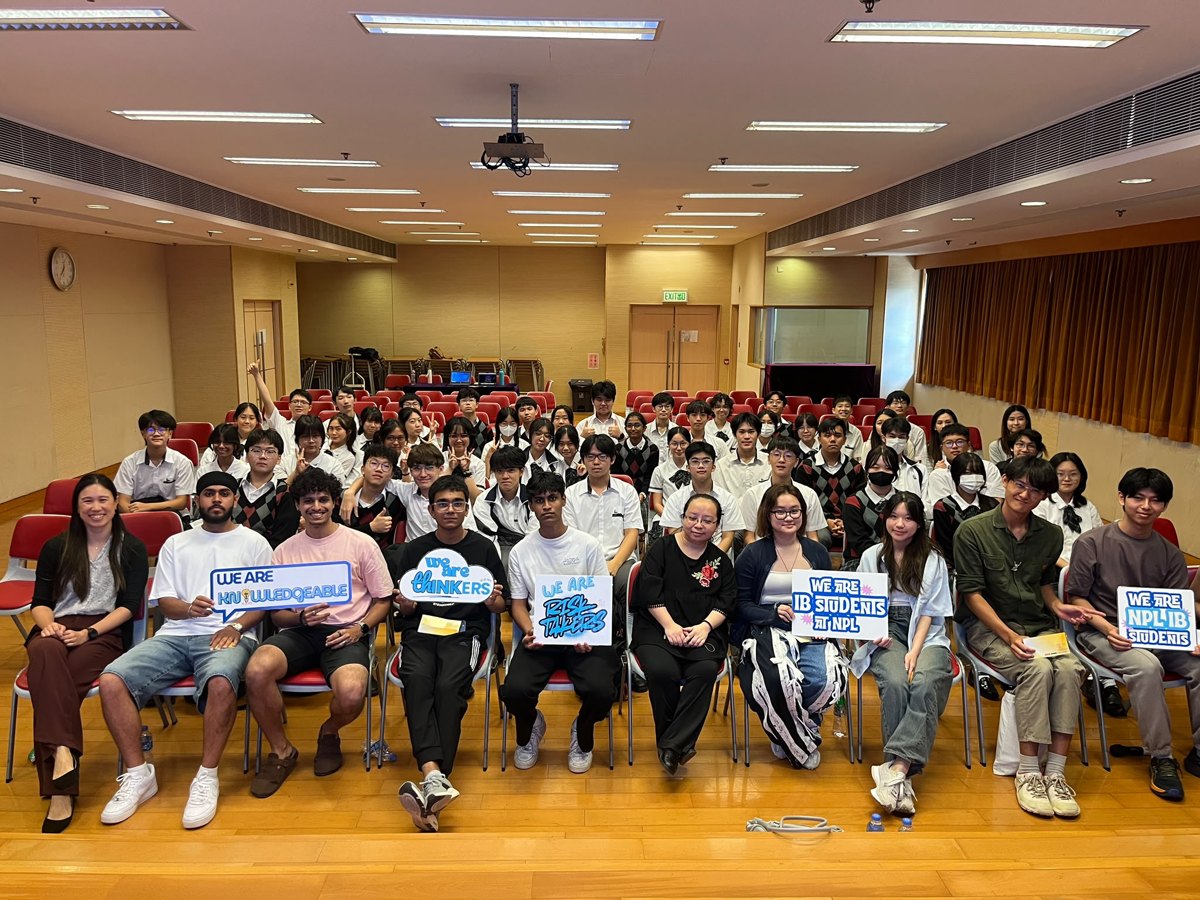
SAY HELLO
I’m interested in startups and scaleups worldwide.
If you’d like to discuss a role or exchange ideas, I’d be happy to hear from you.
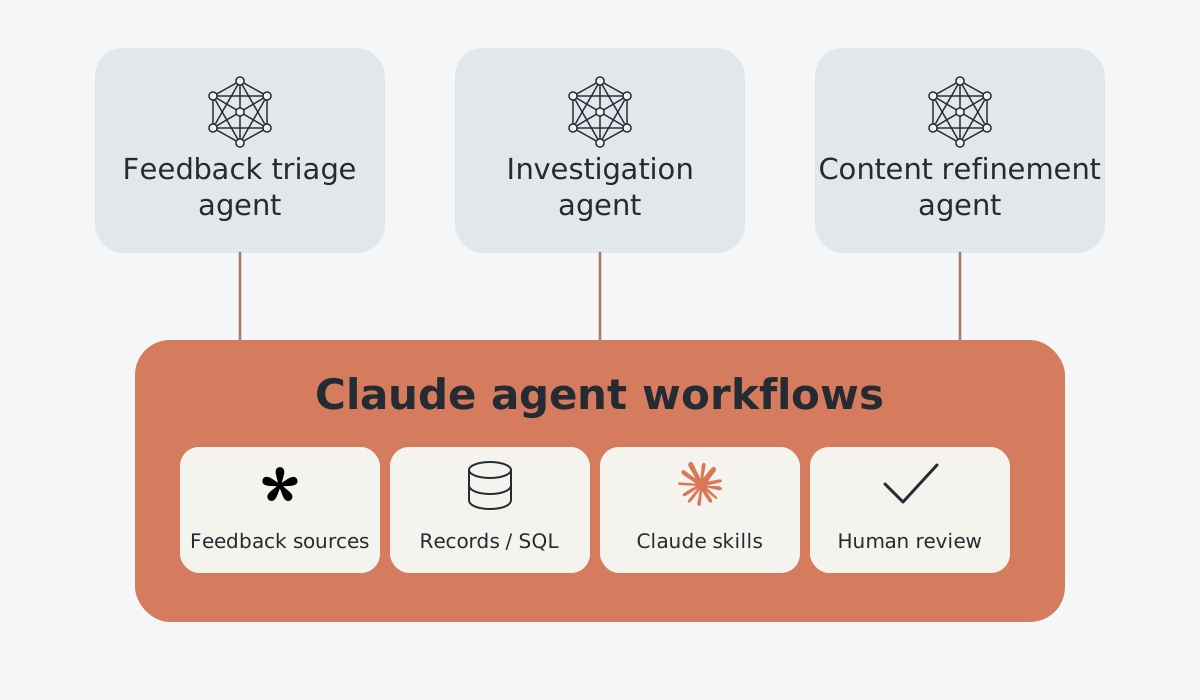
I built connected AI workflows to organise user feedback, investigate it against internal evidence and support revisions, with my review at each handoff.
Feedback arrived through forms, Slack, email and the platform. Before deciding what to change, I needed to connect repeated reports, check what users were doing and understand what had already been tried.
A feedback report on its own did not provide enough context for a decision. The workflow needed to bring related reports, usage signals and prior decisions together, identify missing information, and prepare revisions I could check.
I separated triage, investigation and refinement into three connected agents. They prepared grouped feedback, supporting evidence and revised drafts. I kept responsibility for assessing the evidence, checking claims and approving the next step.
Published guides recorded 4,400+ student reading hours over a 30-day period.
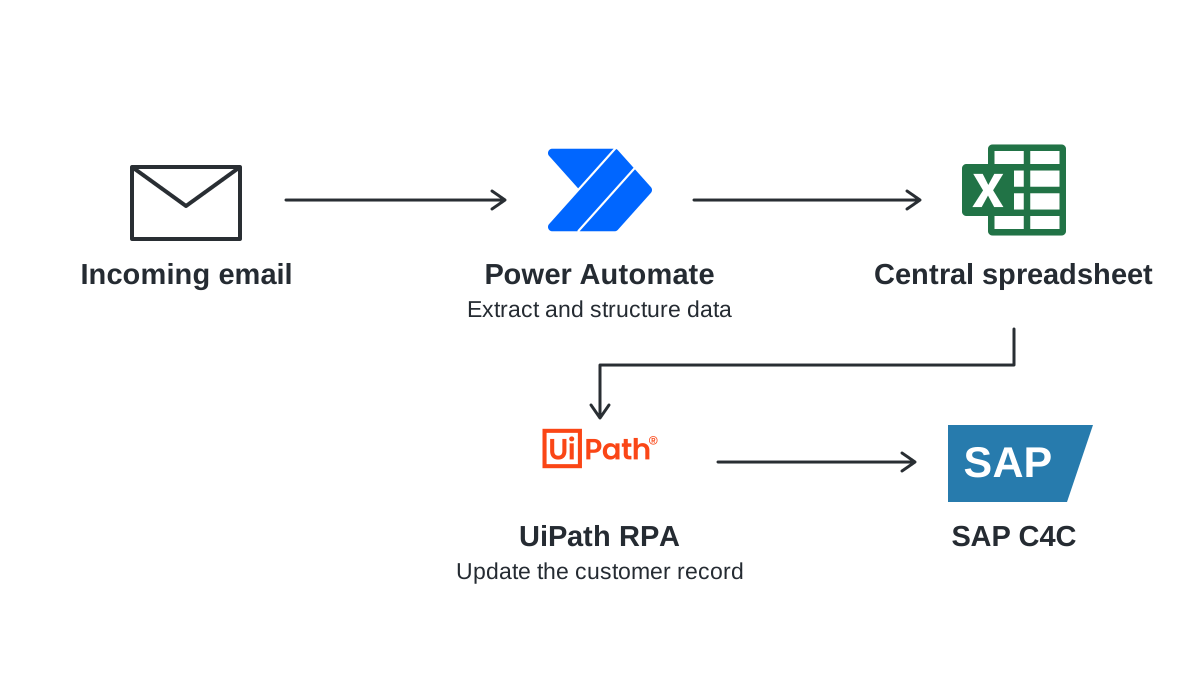
Customer-data errors left tickets unassigned and blocked order deliveries across APAC. I redesigned the email-to-SAP C4C workflow for the data quality team.
Accurate customer records were a dependency for day-to-day operations. As email-based maintenance grew across markets, the team needed a reliable way to capture requests and update records without repeatedly fixing data by hand.
Customer information arrived in unstructured emails. Automating entry alone would leave the capture problem unresolved: the information first needed to be extracted and structured before it reached SAP C4C.
I chose a new workflow rather than extend an unstable existing RPA process. I then split the work between Power Automate for email extraction and UiPath for entering structured data into SAP C4C.
During alpha testing within the RPA team, approximately 5% of runs needed manual fixes. After refinements, that rate fell to 0% in beta testing with colleagues in the Hong Kong office.
Across five automation solutions, my CV records 2,300+ manual hours saved annually.
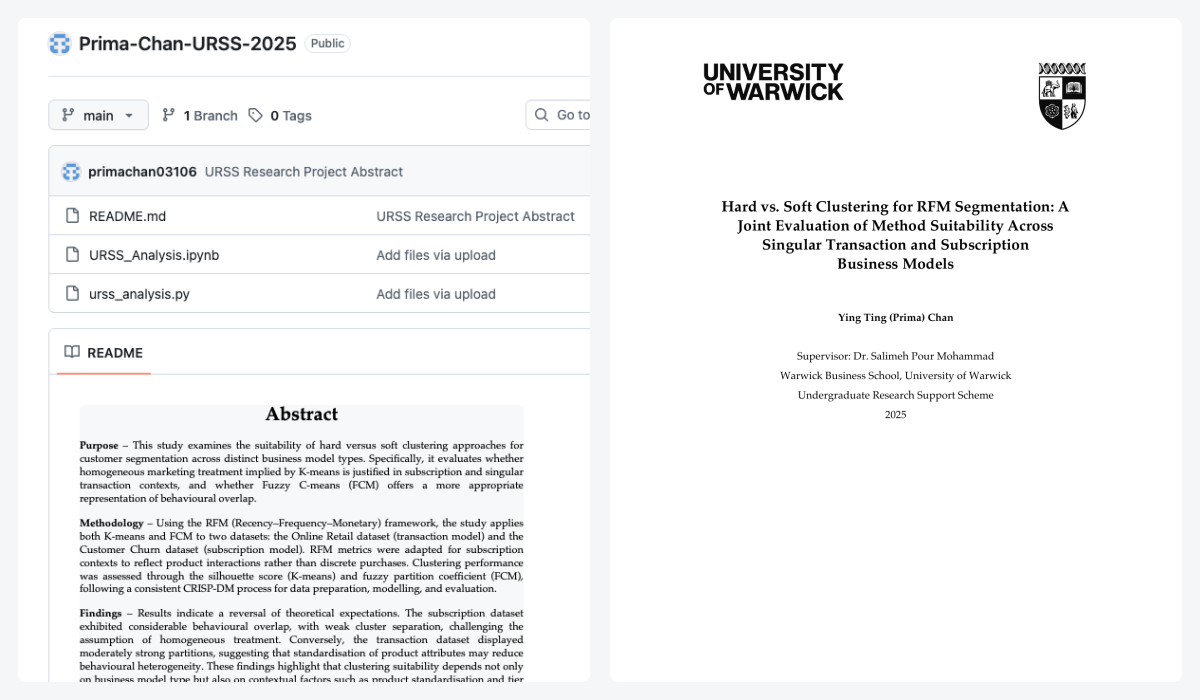
I wanted to understand when treating customers as distinct groups is justified, and when their behaviour calls for overlapping segments.
Segmentation shapes how businesses treat customers. Assigning someone to one group can simplify a decision, but it can also hide behaviour they share with other groups. I wanted to connect the choice of clustering method to the customer decisions it was meant to support.
When is a single segment per customer useful, and when should customers have partial membership across groups? I investigated this across transaction-based and subscription-based datasets.
I compared K-means and Fuzzy C-means rather than choose a method upfront. I used RFM measures as a proxy for behaviour, adapted them for subscription data, and evaluated each method with an appropriate metric: silhouette score for K-means and fuzzy partition coefficient for Fuzzy C-means.
The subscription dataset showed more overlap and the transaction dataset clearer groups, reversing my expectations. I proposed assessing overlap with Fuzzy C-means before considering hard clustering, alongside cluster-quality checks and practical constraints.
These findings support a proposed decision framework, limited to the two datasets and methods examined.
Using CRISP-DM, I compared hard and soft clustering across transaction and subscription datasets to investigate when treating customers as distinct groups is justified.
Assess behavioural overlap with Fuzzy C-means
Distinct groups may support uniform treatment.
Allow partial membership across groups.
Use alongside cluster-quality checks and practical constraints. Findings are limited to the two datasets and methods examined.